


Another day, another “good” and “bad” hair conversation. But this one comes with a twist.
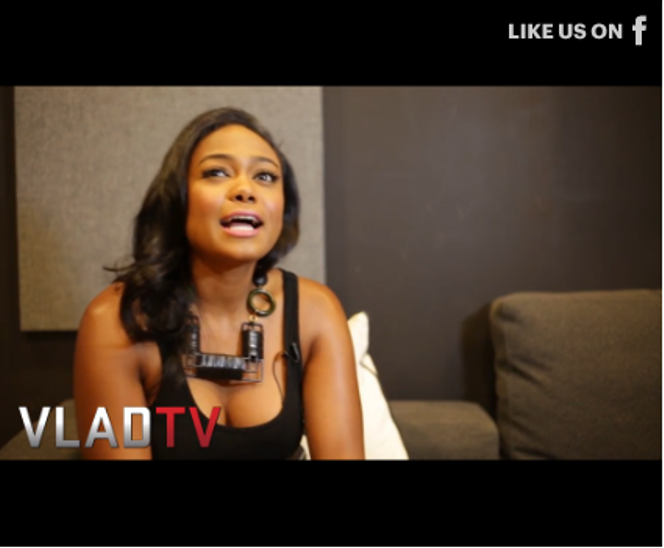
Tatyana Ali, more famously known as Ashley Banks from The Fresh Prince of Bel-Air, chose a recent interview with Vlad TV as her platform for discussing the implications of growing up with the burden of having “good hair”.
Ali shares,
“When I was younger [my hair] was something that set me apart and not necessarily in a good way, from other girls that I knew. Not that I was so much made fun of but it felt like I was made to seem different.”
The “setting apart” to which Ali is referring is the legacy of centuries of eurocentric brainwashing in which phenotypically Black features are discarded as ugly and undesirable. Ali shares that through lenses like Chris Rock’s Good Hair, one side of the story has been captured quite well — the story that shares the implications of whitewashed beauty standards on self-esteem and perceived self-worth of women with darker complexions and kinkier hair. However, she believes there is a story that is less often told.
“When Chris Rock did Good Hair, I was like ‘Oh my God, he should’ve interviewed me!’ because I feel like there’s one side of the story, which he told very, very well, but then there’s another side of the story, which is…you have a group of cousins playing together and you separate the children that way, you’re doing as much damage to that child that you’re calling out for having good hair…You’re creating this separation that isn’t true.”
This is a conversation that has the potential to get really ugly, really quick. But before we digress into side-eyes and mutterings of the “tragic mulatto” (can you tell I saw Dear White People on Friday last week?), let’s set a few things straight.
First and foremost, the legacy of slavery in the US and Imperialism on a global scale has done some really ugly and heart-wrenching things to the cultures and value systems of people of color across the board. And absolutely none of it is by accident or coincidence. In the poignant historical text Miseducation of the Negro, Carter G. Woodson shares one of my favorite quotes: “When you control a man’s thinking, you can control his actions.” In other words, if we continue to psychologically buy in to systems, imagery, and marketing campaigns that malign kinky and coily Black hair as “bad” and something to be devalued, then we will continue to reinforce and perpetuate said ideas amongst ourselves in thought, word, and deed. I believe this is what Ali was referring to when she proposed the scenario about families identifying their children by whether they have “good” hair or not.
But absolutely none of that matters at this particular point in time. Not because I believe in marginalizing myself, but because there is a bigger picture. For me, right now is not the time for that conversation. I’m not here for the oppression olympics, where we try to one-up each other in a game of “who got it worse”. I’m not the target for erasure in mainstream media. Once proudly Black companies are not shying away from women that look like me, or women that sport a curly type 3-something texture. No one has ever told me I need to comb my hair or get a perm, or that my natural hair was unprofessional. My Black beauty and natural hair aren’t under attack and up for debate.
Sometimes you have to stand with your family first, and sort out the drama later. Now is the time to stand. Ali’s sentiments are curious, but ill-timed in my opinion. In due time, it is a necessary and healing conversation to have. But right now, there are some forces at work trying to take out some of my natural sisters — and I ain’t having it.


105 Responses
I think all perspectives and stories in the natural community are valuable and deserve to be heard, popular or unpopular. The more we know, the more we grow (especially that thing under the scalp that we ALL have regardless of hair type– a brain). But I totally agree with the author that it’s pooerly timed, what with the current racial climate escalating in the US. A feeling of isolation based on a prejudice is something you can’t discount because it’s a party of one. So there’s no basis to invalidate T.A’s experience, but we can choose to not engage the conversation at this point and i think it’s perfectly fine for us to feel that way.
Believe it or not I had friends tell me they can’t go natural because they don’t have ” good hair ” and told ke I had good hair so I can go natural . I’m dark skin with medium length natural hair that I’m growing long . I don’t believe in good hair or bad hair . I think if hair is healthy then it’s GREAT no matter what texture . I admire ALL textures . Also I have 3c/4a hair . My hair is nice because I take care of it and it’s healthy not because I have “good hair “. I have healthy hair not good hair . Also 3c/4a is considered ” bad ” hair since it’s afro curls .
I think her hair is pretty but at the end of the day it’s just hair. It’s a shame that women of African descent have to be labeled and casted based on follicles that grow from our scalps.
I agree with her on the subject of separating a child because she has “good hair”. I’m speaking on experience as a woman with a caribbean family/background. When one child has nice long indian looking hair, they tend to pay more attention to that child and she’s oh so pretty; or like what Tatiyana said, they would say “oh look she, she have dark skin, but good good hair”. Caribbean people are so terrible with that foolishness.
I just wish in general it would stop every where, the Caribbean, and the U.S. As we all know now, we can all grow beautiful long hair and were starting to drop the weaves cause we love our textures. I know I do…… but more importantly we DO have beautiful hair. That’s why so many non black people wish to god that they had our hair to do the intricate things we can do and they can’t.
Oh please, it was your beauty and success that set you apart in a good way.
I don’t think we should discard her view. A black child who is gifted or likes to read might also be set apart by his peers in a similar way that is painful to him/her.
I think it’s interesting the author feels this is not the time for Tatyana’s “good” hair struggles when you consider the potential monumental outrage in the wake of someone telling a 4a, b, c, xyz black woman that NOW was NOT the time for her to lament about her “bad” hair struggles.
This kind of thinking is yet another ploy to divide the masses by perpetuating yet another “my ish is way worse than your ish” struggle.
Tatyana has just as much right to express her feelings about her experience with her hair as anyone else! If she needs to have a seat, so do most of the women who comment on this blog.
It seems every other black women thinks her plight is worse than the next! Speaking from experience I can tell you it is only a matter of perception, which is something we all have control of.
Honestly, I don’t understand why ppl keep believing that women are flattered when constantly marginalized for something they have no control over when so many have spoken out about it.
Amen
True!
Thank you!!!!! Couldn’t have said it better myself!
I found your article interesting in that you’re essentially coming down on Tatyana for expressing her ostracisation as a child and yet, you can identify with her in some way (“I could tell you a story about how throughout my life I was the butt of all the light-skinned jokes with my friends, or that I’ve been called white more times than a few.”). I’m a bit confused by the point of this article.
I grew up in South Africa during the time of Apartheid and you can’t really know what that was like unless you were privy to the experience. However, as an adult, today, I’ve come to realise that “Apartheid” exists all over the world and that ‘racism’ is ‘classism’. It doesn’t matter where in the world you are, people will always classify others or put them in a box based on one thing or another. For e.g. the colour of your skin, the texture of your hair, how much money you have, your looks etc. This is human nature. I feel like we need to deal with who we are and find our place in the world. What other people think is immaterial. Constantly being on the warpath over social injustice seems to me to be a true waste of energy. I, for one, am not fighting that constant battle… It’s not worth it.
interesting viewpoint, how old were you when apartheid ended and are you black south african or both? these questions would help me understand what I feel is an odd post. racism is classism? not where I come from . where I come from a black lawyer in an armani suit for a lot of white people is a thug nigger while a homeless pauper white man in the same suit is a businessman. the article is spot on with this being a plot the same way primetime news in jacksonville florida, usa ran a story about a black man cutting his dreads because he couldnt get a job as if that is something people should admire and do. he was interviewed andd was saying the hair on his head was keeping him from employment so even though he had grown his dreads for six years he would cut them for a job he didnt even apply for interview for yet or have. I definitely agree with the author on that point. I would also say this is the reason mixed kids should be exposed to their cultures cuz around east indians (trini or otherwise) she would have been able to just have hair and not worry about good or bad in the black context if I am remembering her background right.
The good hair thing is where you grew up. If Tatiana was from the Caribbean she wouldn’t even be noticed almost all of the women have her hair texture because of the close mixing of different races, notice Rhianna, not only that people in that part of the world don’t care about silly hair texture and shade of skin, seems it’s an African American thing.I wish more African American women could have had the chance to grow up in that type of environment instead of the skin and hair nonsense. Tatians has put so much on her appearance that she seem not to invest in perfecting her acting or singing skills, people without her nice hair as she thinks she has,is further along in Hollywood than she is.
Are you from the Caribbean namia13? I sense you aren’t but forgive me if I’m wrong…
I’m from Barbados. ALMOST all women in the Caribbean DON’T have Tatiana’s hair. At least not in Barbados.
We DO have light skin/dark skin issues here in Barbados and in the Caribbean as a whole. I can say that Trinidad & Guyana both have a larger number of people of Indian descent so they tend to have Tatiana’s hair more so than us Bajans and there are more mixed race people.
I remember really wanting curly hair when I was in secondary school like my mixed raced friends because those girls were considered prettier.
Also, you can research it for yourself but as well but I’m telling you… Jamaica has a SERIOUS skin bleaching situation. Sorry to have to say negative things about my region but just want to let you know.
p.s. I went to Primary school with Rihanna… she has light skin but her natural hair is NOT “good hair” it was quite coily but light coloured and a bit longer than average but she had what we considered “pretty eyes” so that was a good thing…
cosign TC! Spot on response and I will add that there are folks online (claiming to be some have an agenda) from the Caribbean who are spouting that nonsense as well even as far as the costar of Empire with the article on her her sayimg there is no light/dark difference on the island she grew up on. East Indians themselves have color issues and their caste system reflects this.
That is not true I am from Jamaica and there is a class thing in the carribean being light skinned, dark skinned and good hair and bad hair. As soon as they could if you had “bad hair” especially you had to endure the hot comb.
Her story is similar to mine so I get it. As far as the author goes… So women of kinkier textures can share their stories and have kumbaya moments with the commentator community but those of us who were alienated by family for having “good hair” can’t? BYE FELICIA! I had family try to convince me that my father wasn’t my father bc of my hair, cousins go off and fight me over my hair, strangers tell me I’m not black bc of my hair, Africans tell me “you look like me but you don’t look like me” bc of my hair, I’ve been and still am hated bc, according to brainwashed individuals, I’m not “really all black.” So, yes, there is another side to the story. It isn’t to “one up” someones experience, it’s to share a story. If individuals with so called “good hair” new how “good” we had it then we wouldn’t have been plagued with being told “straight is the best way” like our kinky textured sisters. So STOP. We all have our experiences and THAT is what brings us closer
I feel Tatiana comments are valid not “ill timed”. They are HER experiences so they are right on time when someone asks her abt them.my experiences were similar.i was picked on bc i had really long thick 3b-ish hair growing up& they all wanted to play in it.i was told i think I’m cute bc i had lo g hsir! Mind you during my time it was not always abt texture but abt length but many peers alienated me bc i MUST have “Indian Indian my family” …smh. I loved my hair but hated how it got me into trouble! My mom insisted they were just jealous..but try getting an 8 yr old to process that when u just want friends& all the bullies want to do is fight you so they can yank you by your ponytails…it made me feel all types of ways abt my hair…
Everyone has a story.we as blacks have hurt each other over beauty issues in so any ways. just like the kinky haired girl had to learn to love herself in spite of what they said about her hair,Tatiana had to learn to not apologize for who she was and what kind of hair she had. it may seem simple but wanting to be included & feeling left out can be just as hurtful.
Everyone’s got a story.my hurt doesn’t trump somebody else’s hurt jbc it wasn’t my experience.
well, i’m really happy i had the video, because if i’d just read the article i think i might have felt some kinda way about Tatyana Ali, whom i love dearly! she was asked a question and she answered it according to her experience and the way her hair journey made her feel. i personally don’t have a problem with anything she said. I get that some feel like our hair journey is a battlefield and everyone needs to take a stand, but we aren’t all soldiers and because her experience doesn’t mirror those of a 4c sisters doesn’t make it any less relevant. jmho~
Why can’t we have this conversation???
I get very offended when I’m set apart because of my light skin and “good hair” – especially by my own family members. It’s HURTFUL because it’s basically a reminder that I am a product of the rape of my slave ancestors!! Maybe if I bought into Eurocentric standards of beauty, I’d love what they say about me, but BECAUSE I know my history, it disgusts me and makes me feel dirty.
Saying that those with the “good hair” shouldn’t be able to speak on their pain is marginalizing and fails to acknowledge that colorism was meant to hurt ALL black people – no matter the hue or curl pattern.
she is saying to not have it NOW because if people have not noticed the shade toward afro-type natural hair is making leaps and bounds “texture softeners” anyone, so right now is the time to take a stand for the acceptance of the type of hair that over 90% of people of African descent have andnot the time to go off on a tangent. cuz if just one person with 4 type hair looks at the interview and says “she is so lucky” yhen the white media has done its job well. i for one aint havin that either, lol but fa real.
It’s interesting reading some of these comments. Especially the ones stating that people will hate when they’re jealous…so by that statement kinky-haired women are JUST jealous of looser textures? Hmmm. As one other person commented, yes Ali is teased for having loosely curled hair but in no way does that equate to being kinky haired. She experiences prejudice within the community but in the larger context of a eurocentric world she has privilege. I think it’s somewhat similar to being a thin or not curvy Black woman. Yes you will be teased within the Black community but you don’t turn on the tv, or flip through a magazine and see countless ads, shows, movies, articles about how to remove, reduce, eliminate, etc fat and shame you for your size.
We have to remember that once we (Black women) walk out of the house…we are judged by WHITE beauty standards. No I’m not saying you should be teased. No I’m not saying that Ali’s experiences are invalid. But we cannot act like this behavior exists in a vacuum. Come on.
As far as ill-timed…I disagree. I’d say that anyone who has some sort of privilege should make sure to mention that when speaking about their struggles. I would never talk about my weight issues without saying thay big girls have it wayyyyy wayyyy worse. Only to underline that my experiences exist on a spectrum.
So yeah……. 🙂
THANK YOU
I absolutely don’t agree with this comment. You need a support system within the community to which you belong, and if they are ostracizing you, I guess you could get “praise” from White America, but which support is more important? I’m a dark-skinned girl with a hair texture that I guess is classified as 3b. Both of my parents are Black (mom is honey-brown, dad is dark-skinned), and I have felt the exact same thing as Tatiana. I’m not even light-skinned and I’ve gotten side-eyes (from other Black women mostly), mainly because of my features. I’ve been told that I have “European” features, ONLY through the comments of other Black people. Now you mean to tell me that I’m going to get the support in that are from White America? I don’t think so; I should have the support system from my own people. Regardless of what you or the author says, women who are light-skinned or pretty or anything outside of the norm have also been discriminated against and it has the EXACT SAME effect on that person’s self esteem! Period!
-A Dark-Skinned Girl
Yes!!! We need to support ourselves first and foremost. At the end of the day if we are not treated as white, seen as white, or perceived as white, we are then not white thus we are not the epitome of White beauty. We need to take a good look at the variety in black beauty from the states to the Caribbean, to south and central america to all the vast and many regions of African nations.
I don’t think she missed the point, only that she brought up another point of her own to share. Just because someone adds to the conversation, doesn’t mean they haven’t been listening. Perhaps it has taken her this long to get herself caught up on all the sides of this story herself? It is always important to look at all sides of the story when it comes to White Supremacy–when it comes to that particular form of Racism, it is best to NOT forget. You don’t have to cry and wail, but acceptance? Yes ma’am I accept her suffering.
Her point holds a major part in a world full of people who may not feel like they can laugh in your face that you have a fro, but still sneer at it in the privacy of their own homes.
I totally agree. My sisters and i are mutliracial but all with varying textures and skin colors and people would try to divide us and ruin our self esteem.
I agree with what you said because that’s how my daughter’s are treated and categorized based of off their looks, texture of hair,length etc. Hang in there Jasmine God knew who you were and what you looked like before we did. We are all beautiful in his eyes, make sure no man/woman separates or creates division between you and your sisters.
Ms.Ali basically stated that by saying good hair, even if it was meant as a compliment, created an unnecessary divide. We should teach our children that we are all different but there isn’t a good or bad. She acknowledged the fact that the black community is being divided and it doesn’t matter if you are light or dark or have straight hair or kinky hair. By making one seem better than the other we are teaching people to create a divide instead of bringing people,no matter the difference, together. I’m glad she told her story because it is still a problem in society and it’s a reminder that what we say causes issues no matter what side you are on.
I agree 100%.. She’s looking at the Bigger picture that’s been set and dividing Africans altogether since the slavery days with the Willie Lynch Syndrome (Look that up if you don’t know). The sadder part about is it isn’t just us, it’s any one with any kind of dark skin tone complexion (Natives, Indians, Hispanics, Asians/Filipinos, etc). Just we africans have it worse to fight over petty differences. That same Willie Lynch syndrome mentality made to divide us as a people is quite prevalent in these times today and people are trying to act like it’s not. I think when folks Educate themselves on these type of things they see the bigger picture also and stop focusing so much on how different another person’s hair texture or skin tone is and in fact embrace all Africans.
I’m seeing better in our People though today. More African Pride being shown and folks going more Natural instead of trying to blend in with the “creamy crack” crowd (Then again that’s all your own personal choice). Instead of pointing out obvious differences in the kids, people should compliment everyone and not those who have a different skin tone or hair texture to make them stand out.
Africans dont have in-fighting worse, I wish people would stop feeding into those types of things-hair. As for Natives, I am a blk ndn and ndns fight over color, culture, blood quantum, off/on rez, enrollment etc. Hispanic is just a language grouping so they have all the race, good hair bad hair problems too. I speak Spanish and all of their race and hair issues are implicitly included in the colloquial phrases and vocabulary of different countries because most of them are various blood quantums of african and european mixed together even though they will tell you different (I mean in places africans were brought en masse”. Asians have it too because East Asians are definitely touted out as the best of the best while Cambodians, Hmong, Burmese, Filipinos etc are seen as bottom rung. I think that AA in particular and all members if the african diaspora in general learn a language that is outside your cultures and just listen. then we will truly know what we are up against
I actually get what she’s saying. My hair isn’t like hers. I’m a 3b/3c and have heard the “good” hair comments way too much. It was refreshing to see the other side of the debate but I agree it’s not nearly as bad as folks telling you to get perms.
I don’t feel like her remarks were ill-timed. She wasn’t playing the victim and wasn’t trying to one up others who have also felt alienated. People who are believed to be benefiting from the term “good” hair truly are not, this division based on skin color and hair texture does not benefit anyone was what she was trying to say. She also stated that being healthy on the inside is important to having healthy hair and that doing too much to our hair isn’t necessary. Overall, she brought up some great points and in no way was she trying to say her experience as a child with long, fine, wavy hair was worse than other children who have experienced alienation for having thick, kinky, course hair.
Lets get this straight here,I see more dark skin girls with straighter hair textures than light skin women,any day of the week. That is the misconception here that Black people fail to realize. That is not true,the majority of Dark skin girls have more straighter textures. As a whole,you will catch a dark skin woman with long hair than a light skin woman,its just more noticeable because that woman is light,so they try to say that they look more white.I live in the south,and most women with the long bouncy hair are dark skin girls,not light skin ones.
Most people don’t realize how much they buy into stereotypes. They don’t ever take the time to take stock of what is really true.
Pain is pain, Shameka. Your burden is as real and heavy as the next person’s.
I think Christine was referring to the idea that in our current society, black women who are darker with kinkier hair have often been forcibly divorced from popular conceptions of beauty. As Christine said, women who have hair like Ali’s aren’t having the problem currently of being seen as less beautiful in general. Whereas there nicer hair usually lighter skin counterparts are currently considered the epitome of beauty.. Thats why right now to hear a woman who has that look (Ali) complain and say whoa is me because I have easy-to-deal with hair… is kind of annoying or grating even… Its like when women with big breasts or butts complain about not being able to find things to wear. Its like ok..ok I know you are obviously feeling burdened by your bounty…but on the outside looking in, it just sounds like your showing off… like miss me with your false tragedy… no one ever called you ugly for having “pretty hair” so stop… There are little girls out there right now who are told they need a perm to be pretty or wish they could be light… I am not crying you a river
you deserve a thumbs up
Thank you Shameka! That’s exactly Christina’s point. Whites get bullied by other whites too, that does not negate the fact that they are epitomized as the beauty standard around the world. So what if a handful of black girls didn’t like you, you were still the sought after ‘good haired’ prize by the boys. As Christina said, your hair texture is not maligned in this society so Tatiana’s plight is like that of a white, red head. They might get bullied but they still reap the benefits of white skin privilege. I’ll save my sympathies for the people who’ll never know how it feels to be put on a pedestal for their features.
You had me until you started talking about girls with big boobs and finding clothes to wear. Since this is something I can directly relate to being a GG myself, I think I can now understand Tatyana’s plight even as a brown-skinned girl with kinky hair.
Talking about boobs, it’s way worse to have big boobs than small ones, you’re perpetually trying to find an outfit that doesn’t reveal too much cleavage, or not too figure hugging to prevent attracting even more unwanted attention, and those are the ones that don’t make you look like a pregnant whale. People think that just because they stick out, it’s an invitation to be touched or commented on. People stare or jeer at you from across the street and make you feel like a prostitute just for having larger than normal appendages.
Talking about ‘good hair’ you assume that just because her hair isn’t kinky that it’s easy to manage. Well, everyone’s hair has issues; it could be a a pain to detangle or not look like she was electrocuted etc, I don’t know her struggle but I doubt she just wakes up shakes and goes every morning. Also, her experience was being picked on my people because of her hair. If you have ever been properly bullied you’d understand why it’s not a ‘boohoo for you’ kind of thing. Female children can be ruthless, and I can’t imagine the pain she would have gone through from the girls mentally trying to break her down, all because she of something she didn’t even choose.
How is this ill-timed? I don’t understand that. If she was asked a question in that moment and that was her truth then what was ill-timed about that? Maybe I’m missing something?
The question is: WHAT HAPPENED TO HER “GOOD HAIR”???????
Is it true or not that Tatyana’s father is Indian? I ask this not to divert the topic or deny that black folk with “good hair” don’t exist. But if she is indeed half Indian couldn’t it be left to the ignorant notion that her hair texture is automatically attributed to her Indian half?
Nonetheless it’s interesting to hear her side of the story and understand that those that are closer to mainstream standards are not automatically absolved of any discrimination and/or mistreatment from within the community or outside of it.
I think Tatianna is Afro-Latina. I saw her on a documentary about it.
Trinidadian (father of Indian decent) and Panamanian (Mother of African decent).
All of the above…TRUE. Yep Ali has her pov. But true that this may not be the right time for that story. then again, when is the right time to tell your own story? We come in all flavors. Dark skinned, straight hair, light and nappy as all get out! (me lol) We all have our crosses to bear created by slavery and white supremacy. My grma is VERY light…but was the darkest of her siblings. They called her Black Gal and not in a nice way. she was the cinderella of the family, the butt of all the jokes, the most hated…she was never loved by them and at age 87 she still talks abt how much that hurt her to this day. ALL of our stories matter and until we resolve them all, we cannot all heal. The End. Love to all.
Well said.
“she was the cinderella of the family, the butt of all the jokes, the most hated…she was never loved by them and at age 87 she still talks abt how much that hurt her to this day.” <<<< THIS IS SO DEEP.
"ALL of our stories matter and until we resolve them all, we cannot all heal. The End. Love to all."<<<<I'm here for this!
I disagree that there is a good and bad time to discuss different parts of being black and having natural hair and the struggle that goes with it. I’m not with one-upping either, but the point of sharing struggles is to find commonality and understanding I thought. I’m with her. My hair was different from my sister’s and most of the black kids I hung out with, but was nowhere near my white friend’s hair either. I had to be extra nice when I hung out with certa kids because if I weren’t “I thought I was better” BECAUSE I had long hair. I still can’t give suggestions to people with certain hair types because they say “but you wouldn’t know how to handle my hair, you have good hair.” It isn’t silly to think that discussing this would make these ridiculous statements and assumptions less frequent.
Very well said!
I feel her hair pain. Growing up, I was bullied for being light skin with “good hair” by darker girls.
NapturallyKia, I never understood the challenges that lighter complected blacks face until my oldest daughter went to a school that was primarily African American. She was bullied and harassed because of her lighter complexion…She told me that girls would call her stuck-up, which was one of the milder names I might add, without even knowing her. It is ones poor self image that they pushed off on those they feel have the upper hand. My youngest daughter had a different challenge, she is chocolate but she has hazel eyes and a much looser hair texture. Interestingly enough, they were both bullied for things they had no control over. At the end of the day…WE must love ourselves in our varied packages and then and only then can we love and accept others.
not tryin to be funny but was this recently? and outside the us? because in the age where there are first generation mixed kids in most families are you sure this was because of her light skin? hair I can definitely see because looser hair is much rarer except probably with first gen mixed people. I mean blk ppl’s complexions vary from past mixes so much that in a majority black school there had to be a large amount of people who werent dark. I was a kid in the 80s and the ones who were picked on for color were always the darkest kids male and female. No real shade and I mean this to everyone cuz im tryin to think a mostly black school that would have that few amount of kids in each grade that were lighter for it to stand out so much but even for darker kids to be picked on I think it is important to state that like most bullying it will be a single bully or a single group of kids picking on another kid. Maybe it just rubbed me wrong that you mentioned the race make up of the school like it was relevant that I was just tryin to fit how that mattered.
What an articulate and thought-provoking article, Christina. But for the most part, I agree with the many commenters who say that there is nothing “ill-timed” about Tatyana Ali’s remarks. Her contribution to the natural hair debate is valid and can help bring greater understanding about what it really feels like to be perceived as privileged for something that, in fact, triggers many to cast you aside from your racial group and categorise you as “other”. While my hair is not as silky as Tatyana’s, it’s very thick, long and 3c in texture. It has always been this way. For as long as I can remember, I’ve been singled out because of my hair. In the eyes of the black girls I went to school with in England, I had “good” hair that was too near to white for their liking. Many were hateful to me as a result. White girls would also make fun of my “bushy” hair. I was experiencing hurt from both sides of the colour spectrum. To this day, friends, family and even strangers regularly comment on my hair. It’s tiresome, to be honest. While the remarks, these days, are mainly positive, it hurts that the many women who pay me compliments compare their hair unfavourably with mine. I am a dark-skinned black woman who is tired of being interrogated over my racial makeup or being called a “throwback”. Many people think it’s okay to confess to me that they hate their hair texture and would rather have mine. I’ve been put on a pedestal in some ways, which may sound positive, but it is not. It keeps me separate from my kinkier haired sisters, which is something I abhor. These remarks feel white supremacist in nature and highlight the astonishing levels of self-hate in our community. I’m in my thirties, have recently transitioned after 20-plus years of having processed hair. And unbelievably I am only just learning to understand and accept my tresses. The good versus bad hair dichotomy hurts us and divides us all. Having so-called good hair really ain’t all that good, folks.
I understand your point because it sounds like people use you as a mirror for their own hair insecurities and act like you don’t or shouldnt have your own. Well stated but she is talking about the attack on us for retaking our hair out of the eurocentric and back into our own hands. they comin for us and tatyana expressing this now is not the right time. besides did anyone else think that more than likely her hair texture helped her score the role she is famous for? will and hillary were the lighter ones , carlton and ashley were darker and she almost needed to have hair much closer to hillary than to the Viv. I mean it was mid 90s the pro-black resurgence we saw earlier in that decade was dyin down. it seems likely especially considering the way they did Viv and later the darker daughter on the Wayans sitcom
Only in America! Why don’t we see and hear about all this colorism and ‘discrimination’ in other black populations elsewhere? To me, it all seems like meaningless controversies manufactured by African Americans themselves.
You must live in a bubble ( and delusional) if you think issues with skin tones and hair are only an American issue. They are just more vocal about it.
Have you even read the piece, where she said even in the Caribbean she was encountering the same issues.
Kim, I must respectfully disagree with everything you’ve stated and questioned.
Colorism is an off-shoot of racism, neither of which were invented by hlacks. Colorism exists everywhere that colonialism existed as whites established a color caste in which whites put themselves at the top and the darkest people at the bottom, everywhere they settled. You don’t hear about colorism in black populations elsewhere? That shows how limited your exposure has been. Colorism and skin bleaching are huge issues in India.
Not true that this is only an issue in America.You can go to South America, the Caribbean, Africa and Europe and see how much self hatred is among us. People who make remarks like yours must walk around with eyes and ears closed. go check out a film called Beauty Is recently produced in England by an African brother based in England about the very same issues. Ever heard of skin bleaching? I’m sure you know about the weave and extensions industry.
Sadly, this is true and will always be a on-going discussion for blacks for years to come.
There is a type of separation us black girls put on each other with good hair/bad hair. Though no hair is bad or good, but there are different types such a fine, course, thick, thin, curly, kinky, etc ..
But typically when you are black with fine, silky hair with that “baby hair” you are in the “good hair” category and girls hate on you for it. It is what it is.
I did see the Good Hair documentary and yes, I am a product of most things that were discussed in that movie, it was definitely enlightening.
Tatyana Ali should have been on there to say her side of the story, her life and what stereotypes she has gone through. I remember seeing her on Fresh Price when she was a little girl with that looong curly hair lol I’m sure she knows a thing or two about bullying.
Why is it that darker women have kinky hair. There are a lot of dark black women in the south that has curly or wavy hair. It is not true that the darker you are the kinkier the hair. Skin color does not define hair type, DNA does.
True, I have a few friends that are dark skinned with silky big curls. I noticed that as well.
This +100 skin complexion & hair type don’t automatically correlate!
I’ve noticed some are very skilled at invalidating others experiences. They think they’ve had it worse than everyone else and refuse to listen to anyone else’s trials and heartaches since no one’s come close to theirs. They need to get over themselves.
I think that in order to tell a story, particularly about something as polarizing in our community as hair and skin tone, all perspectives, even those that may not garner sympathy or empathy because they are in the minority (in Tatyana’s case “good hair”), because hair texture was not necessarily an issue of shame as those with tighter curl patterns, and as a result was treated differently because of her hair. Is her story no less valid? That because of the ignorance of some adults that they separated her and her cousins based on hair type leaving both parties feeling a certain type of way. This is almost the same as discounting the light-complexioned black woman’s experience in society just because she is light-skinned — She’s still black and a woman though, right? The same applies with hair.
Totally agree with VoieofReason. My comments were not directed at Tatianna. We have to stop trying to silence women whose expriences differ from ours.
I disagree. I’m not African-American (am Nigerian) so I may miss some of the nuances of the good hair discussion. But I feel that Tatyana Ali’s experiences are also part of the story. She is just as African-American/Black as the other women in the documentary. And since the documentary talks about good hair, it makes sense to include women with this so-called good hair. I think for a people to heal and overcome the negative effects of these classifications all parts of the story need to be looked at. Though people with kinkier textures may perhaps have had it worse, doesn’t mean her experiences should be discounted. The author says it’s not yet the right time to talk about the painful experiences of fair skinned good haired people. But then I wonder, when is the right time? I feel Tatyana dealt with the subject in a very respectful manner. I don’t think she wanted to steal the spotlight from ‘suffering’ kinky haired dark skinned ladies.
Amen.
I agree totally. How can we talk about healing but only for a segmented group, within a group??!!??
Right! She has identified in previous interviews with being black and calls herself a black girl, so it’s not even about that. I don’t even think its about light-skin and good hair vs dark skin and kinky hair because those things don’t necessarily go hand in hand. Tatiyana is not fair skinned, she arguable dark skinned and she does not have kinky hair, and there are many fair-skinned and lighter brown females with kinky hair. I really wish people would stop. I think its more about all of us having a different story to share, it is true, we are not a monolith. I am dark skinned and I never hated my complexion, was never bullied because of my complexion, or anything like that. I have kinky/curly hair and as a child I was bullied because of its length. I was constantly asked by 2 other black girls ( one light skinned, and one dark skinned) in my elementary school why my hair was longer than theirs and one of them even went as far as to beat me up and cut my hair with scissors. So really there are no specifics to who gets excluded or included. A bully as someone above mentioned will bully you regardless.
Haven’t we been through the “good hair” discussion. Girl, bye.
don’t be bitter….sheesh!!!
Not bitter at all, just really girl bye.
Yep, thumbs up!
We’ve also had the dark skin discussion a million times but we still talk about that because it’s an issue..just like the whole good hair thing is an issue as well in the black community..so no need to shut her down..she has the right to tell her story just like all of us do
Bullies will find a way to disparage their victims about most any attribute. Growing kids got bullied for hair short AND long / being to dark AND to light / smart AND dumb. However, it’s never about the victim, it’s about the bullies and the bully’s goal to inflict pain. It’s unfortunate when we internalize the bully’s message and actually believe we are a target because of some attribute we have instead of the problems the bully has…
Great article and as always, well written Christina Patrice.
She was asked a question and she answered it truthfully from her perspective not sure what was ill timed about it on her part.
She didn’t interview herself so i disagree with your conclusion that it was “ill-timed”. And who is she waiting for? She’ll be dead and gone and so will I by the time she ‘stands with her family.’
And the act of marginalising your issues is just that- you can always contextualise but why sit in silence because you’re respecting the ‘bigger picture.’
Leave tatyana alone.
It is valid. I can see how people could resent her because she has what society deems as “good” hair. I also understand how the jealousy could cause people to not like her because her hair makes them feel inadequate. I don’t have “good” hair but I absolutely have been in situations where people resented me because I had something that they did not.
Well, technically she is an Afro-Panamanian and that’s just the typical texture of hair that they have. Only people who do not truly love themselves and who are not truly, “black and proud” would hate on another dark-skinned person with a looser curl pattern. Honestly, how boring would this world truly be if we ALL had the same kind of hair or complexion? News flash, hating on someone else doesn’t make you, yourself look better, get over the hair envy already, we aren’t doing each other any favors.
I’m sorry but miss Ali is Trinidadian. That is all.
that’s what she meant though lol
I agree that she is being a little self-indulgent and is definitely buying into the “oppression Olympics” game. No one is assuming that its easy being a black woman in this modern world, and I agree that she misses the point of standing with family/community when she chose to have this conversation ill timed, very public and I am sure soon to be viral nit pick about how she’s struggled with her “good” hair too. For me, this is just another Raven Symoné-esque way of showing coloniality what a good job they did of dividing and conquering blackness, so good that whiteness isn’t even involved anymore, just us black people talking down ourselves and perpetuating the cycle of self hate.
How does a person know when is the right time to tell their truth? I don’t know. I don’t think Tatyana knows either. I think she has an experience in the area of what it means to be a person of African descent in America. I appreciate her sharing how the “good” hair vs “bad” hair dichotomy can also negatively impact those who some may believe are benefited by the distinction. I think it’s an interesting viewpoint. I’m glad she shared it with us. I personally don’t think it warrants any particularly visceral reaction one way or the other. Frankly, I am surprised that an article of this length was written on it.
I agree with the comments in the last few paragraphs. Yes good andbad does create segragation but she has never been on the negative side. To this day my housemates make jokes about my natural hair because in Jamaica, silky hair is regarded as good and there are two indians in the house. Not to mention my hair is short 6-9″. And it gets to me sometimes because this is the second longest it has been. I used to cry, why couldnt i have better hair. My self esteem still suffers and i know i am not alone. I am improving slowly but this negative stigma attached to kinky hair needs to stop. “go perm your hair.” “Why don’t you straighten it?” “It looks dry and rough.” “Your hair is so frizzy and unkempt.” I detest what it has done to the black population with kinky hair. Especially when parents with kinky hair put you down too.
And sadly, the few to say something positive have been individuals with curly or wavy hair. So strange. Nothing is wrong with kinky hair. It is beautiful, versatile and natural. And should not be used as a way to force people into a shell.
I understand the premise of this article, but I think those battles do matter. I don’t think that the problems experienced by girls with looser textures among those with coilier textures should be postponed for the very fact that it’s still happening, and to little girls, and those experiences are shaping their futures. It’s good awareness for mothers who wouldn’t think it to be a problem ie non-mixed mothers with mixed children. And to teach our children not to retaliate against those who insult them for having coily hair or dark skin by looking down on those who have straight or wavy hair and light skin.
If my mother had ever even considered the fact that I might receive criticism among my peers for my hair type or complexion, she would have encouraged me and built me up to withstand it. I know this because she built me up in many other ways for other issues like being proud of having brown skin when white kids made fun of me at school, or being proud of my faith. While I’ve accepted and come to love what I have now, I know more than a few women who developed strong biases against black people based on those experiences. People will always hate on what they are jealous of, so while I understand the importance of fighting for black women to be heard, I don’t think any of these other conversations need to be quieted, dismissed, or postponed.
We all have burdens and each one is a legitimate as the next. Good hair Bad hair…Light skin Dark skin… Everyone has a valid experience.
Someone choosing to go back to a relaxer may disguise it as in attempt of convenience but maybe it’s really a cover up. If I’m relaxed good hair/bad hair is no longer applies because no one can give the diagnosis because the the hair has been chemically destroyed. So now curls, coils, and kinks are no longer in the picture. Someone hearing what she is saying or living a similar experience may think it is better to relax because then no one will categorize them because of their hair texture.
I always feel really torn in this conversation, because I don’t want to deny anyone their experience. Women with “good hair”, light skin etc still face racism, while also being alienated from classmates, neighbors and even siblings–that struggle is real and I don’t think any pain of mine entitles me to deny anyone else the right to express their own.
That being said, it is frustrating to me to have people insist that the very real alienation they felt from their communities for being considered beautiful is the equivalent to the struggle of those considered ugly, or that their struggles mean they haven’t been privileged.
We all really need to learn how to hold two thoughts in our heads at once–that there are women with privilege that share in some of our struggles AND that those struggles don’t make their privilege disappear. That means respecting the right ALL of us (even the white ones–still horrified by that Curly Nikki craziness) have to talk about our experiences, acknowledging the differences that exist and not buying into the idea that opening ourselves up to the stories of other people lessens the value of our own.
A very well rounded opinion and articulately stated.
This is the most objective comment I’ve seen on here so far. In all fairness, just because kinkier types have experienced alienation, it does not give us the right to invalidate other people’s experiences.
But still we cannot deny that in the larger U.S. society, certain hair types are considered more beautiful-hence the privilege.
Very insightful analysis.
I remember when I was a little girl, we were in Sunday school at church, when in came this black girl with long,silky, curly hair, sililar to tatiana’s texture. I remember some of the haters that said things and asked dumb questions like,”What are you mixed with?”. Both her parents were black, btw.
Anyways, I was friends with her and she wasn’t stuck up or anything( I wouldn’t have been friends with her if she was). I dont really know where I’m going with this, but yeah, needless to say I was also friends with another black girl who had long 4a hair. Ignorance can make you miss out on great people in your life.
So very true.
ill timed, why? when would be a good time for her to discuss what she perceived she went through growing up?
I don’t think her sentiments are harmful or detrimental to the natural hair movement; there are many spectrums to natural hair and it is beneficial to be more accepting.
Christina, I love your Black politics pieces. You speak so eloquently and know what tf you’re talking about! Thank you for this. Thank you for understanding the bigger socioeconomic factors and not trivializing and/or personalizing these issues. One of my pet peeves is when it comes to Black issues, people will completely nullify history, socioeconomics, and blatant racism if they themselves have never “experienced” it. Smh thank you again Christina
I agree, but saying that expressing her personal view and experience on her hair is ‘ill timed’ doesn’t make any sense. She was being interviewed, meaning she was asked. This is a topic she wanted to be included in and by saying that she should reserve her opinion on black hair means you are doing exactly what you expressed as negative. That is devaluing her opinion because her hair is what maybe perceived as ‘good’. How terrible of her to ever try and relate and be part of a natural hair debate.
*puts crash helmet on…..
Because it’s so easy to write her complaint and life experiences off just because someone may have had it harder, I’m going to try to understand it. ALL women of color are marginalized by the “white is right” beauty spectrum.
Exactly! Why can’t people just share their truths, their experiences and or struggles without someone trying to find some reason to dismiss it just because others may have had a more traumatic experience? Why does it always have to be about who had it worse or who society accepts more than the other when sharing different experiences? Struggle is struggle but not everyone’s struggle is the same. So instead of being so dismissive towards her, just try looking at it for what is it, another person’s perspective!!
This article seems unnecessarily negative and nit-picky. If this is her experience, why not just let it be. To me, it sort of seems like the writer is trying to negate the authenticity of Tatiana’s personal experience and I just wonder, why? What’s thepoint? That’s how she felt and how, I’m sure, thousands of other black women with her experience do too, so instead of silencing her, why not just listen, digest, see how you can contribute to making a change, if any, and move on… Why all the negativity? The author is the one being divisive, not Ali. The truth, shall set you free! I’m glad Tatiana is speaking out and being truthful about her perspective. Just because we share racial similarities doesn’t mean we all share one communal experience. It’s the beauty of diversity. Just let it be!
I know how Tatyana feels. I have ultra kinky 4C hair and I was still told that I could only go natural because I have good enough hair for it. What’s sad is that my eldest sister told me after she asked how I do my hair (I was wearing my usual twist out).
I liked how she mentioned the “second side” of the story. Unfortunately in the natural hair community there is a separation between who has “good hair” and who has “bad hair”, and like Tatyana said there’s damage on both sides that I don’t think some of us acknowledge. I’ve seen kinkier naturals tear into naturals with a softer texture and say they don’t know the real struggles of having black hair, just as I’ve seen naturals with softer textures bash those with kinkier hair. There are some naturals, not all, that feel more entitled to the natural hair community because of their kinkier hair texture and will alienate those with softer textures, and that’s wrong, just like it’s wrong for those with kinkier textures to be alienated. I feel like this emphasis on texture and curl pattern is one of the biggest hindrances in the natural hair community and the black community, and it’s causing us to hurt one another versus using this experience to build each other up and help each other learn to accept ourselves for exactly who we are.
I couldn’t agree more. Very well said.
well said